
 Trump elige a Susie Wiles como jefa del gabinete en Casa Blanca
 Abinader entrega muelles en Río San Juan y Cabrera para la pesca
 Primer Ministro Haití seguirá en Puerto Rico, su futuro es incierto
 PRD respalda llamado obispos a fortalecer ética pública en RD
 Abinader dice la RD se prepara para dar un gran “salto digital”
 Las EDE invierten RD$1,488 mm para mejorar servicio eléctrico
 Acusan 4 sargentos por muerte dominicano aspiraba a cadete
 Centenares de desplazados y 3 provincias en alerta por lluvias
 El dólar bajó 30 cts y el euro 25; eran vendidos a $60.91 y 74.39
 Gradúan los primeros doctores en Ciencias de la Educación RD
 Lluvias desbordan río y anegan comunidades Gaspar Hernández
 Carolina es de los alcaldes más valorados, según una encuesta
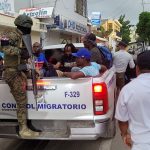 DGM detiene 1,031 haitianos indocumentados y deporta 59


Embajador dominicano ante la Santa Sede defiende cierre consulados Haití

ROMA.- El embajador dominicano ante la Santa Sede, Victor Manuel Grimaldi Céspedes, defendió el cierre de los consulados de República Dominicana en Haití, mediante carta dirigida al director del diario del Vaticano L’Osservatore Romano.
En la misiva a Giovanni María Vian, con motivo de una noticia que publicara dicho diario sobre el cierre de las sedes consulares dominicanas en el vecino país, Grimaldi recuerda que en enero del 1991 turbas haitianas agredieron al nuncio apostólico en Haití y destruyeron la catedral.
La carta:
«It has been widely reported here that the attacks on the home and office of the Papal Nuncio, Msgr. Giuseppe Leanza, were aimed at Monsignor Ligonde, who has been in hiding ever since. When crowds attacked the Nuncio’s home in the wealthy Petionville area early Monday morning, Monsignor Leanza and two nuns were able to escape with the help of neighbors and the police, but the Nuncio’s personal secretary, the Rev. Leon Karenga, was chased by the crowd, chopped at with a machete and nearly killed».
«The cathedral, one of the country’s most prized architectural sites, was razed by crowds angered by the statements of Archbishop Francois Wolff Ligonde, who last week in an Independence Day homily to the nation warned of a coming «regime of political authoritarianism» and asked if the country could avoid adopting the «social Bolshevism rejected by the countries of the East?»
«The offices of the Haitian Bishops’ Conference were also gutted, and thePapal Nuncio in Haiti, Msgr. Giuseppe Leanza, was set upon at his office and stripped of some clothing by an angry crowd before being whisked to safety by neighbors».
Haiti’s Victors Working to Soothe Fears
PORT-AU-PRINCE, Haiti, Jan. 10— Three days after a failed coup attempt set off a spree of looting and vengeful attacks that left at least 70 dead, supporters of Haiti’s President-elect, the Rev. Jean-Bertrand Aristide, have begun working to calm the fears of those who warned that the leftist priest’s election last month would unleash a wave of revenge.
After three nights of curfews and calls for order by Father Aristide and other political figures, life in the capital and other cities largely returned to normal today. But as Haiti cleans up from the violence, diplomats say damage to one target of the attacks, the country’s Roman Catholic hierarchy, will prove difficult, if not impossible, to repair.
There is no evidence that Father Aristide, who has long battled conservative Catholicism, directed attacks in which the capital’s 221-year-old cathedral and the Vatican Embassy and residence were destroyed, the Papal Nuncio assaulted and his secretary gravely wounded. But diplomats and Haitian analysts say the incidents have badly hurt the new Government’s image among the diplomatic corps and may have crippled ties between Haiti and the Vatican. Explaining the People’s Reaction
Several diplomats said in interviews that Father Aristide had been neither fast enough nor forceful enough in condemning the street violence that followed the failure of an attempted coup by a former leader of the brutal Tontons Macoute militia.
In a brief statement read over a radio station Wednesday afternoon, Father Aristide called the destruction «hideous,» but he dwelt on explanations of the people’s violent reaction. His call for «vigilance without vengeance» was seen by many as advocating further popular mobilization against supporters of the deposed Duvalier family dictatorship that ruled Haiti for 29 years.
«The attack was hideous, but at the same time they are saying, ‘We have to get more Macoutes,’ » said one senior Western diplomat. «Here we have the violation of a diplomatic premise and wherever that happens in the world it must be considered very grave.»
Many observers have expressed concern that Father Aristide’s past statements, which come close to advocating violence openly, have set a tone for the people that will be difficult to contain. United States Concerns
The United States, Canada and the United Nations have publicly expressed strong concerns to Haiti’s interim Government and, indirectly, to Father Aristide.
«There can be no excuse for using the failed coup attempt as an excuse for exacting vengeance,» a State Department spokesman, Richard Boucher, said in Washington. The Vatican has remained silent on the incidents.
Father Aristide’s spokeswoman, Marie-Laurence Lassegue, said the violence was an aberration. «I know this is something that has shocked a lot of people,» she said. «But we don’t think the people realized what they were doing, that this was an embassy. We have always respected embassies in this country and this is a great pity that will not be repeated.»
Nonetheless, other supporters of Father Aristide said the violence had been caused by criticism of Father Aristide, and the insurgent «Little Church» movement he has led, by Msgr. Francois Wolff Ligonde, the Archbishop of Port-au-Prince. ‘Chills the Hearts’
«Ligonde officially gave his benediction to the coup,» said Jean-Claude Bajeux, a human rights advocate and former priest, expressing a widely held interpretation of a homily by the Archbishop in which he spoke of the «anxiety that chills the hearts of mothers and fathers» at the prospect of an Aristide Government.
It has been widely reported here that the attacks on the home and office of the Papal Nuncio, Msgr. Giuseppe Leanza, were aimed at Monsignor Ligonde, who has been in hiding ever since. When crowds attacked the Nuncio’s home in the wealthy Petionville area early Monday morning, Monsignor Leanza and two nuns were able to escape with the help of neighbors and the police, but the Nuncio’s personal secretary, the Rev. Leon Karenga, was chased by the crowd, chopped at with a machete and nearly killed.


Haiti Rounds Up Rebel Leader’s Supporters
PORT-AU-PRINCE, Haiti, Jan. 8— Many stores and businesses remained closed today and scattered gunfire could be heard as the police and soldiers rounded up associates of a former Interior Minister whose coup attempt was thwarted early Monday.
The coup leader, Dr. Roger Lafontant, who headed the brutal Tontons Macoute militia during the Duvalier dictatorship, was taken today to the national jail. The Haitian Army, which intervened to put down the revolt, promised to have him tried in the civilian courts.By early evening, 44 victims of Monday’s coup-related violence had been taken to the national morgue, but many others, hacked to death and burned in the streets, were thought to have died. Many stores and businesses had been looted and thick black smoke rose over the city.
At Dr. Lafontant’s headquarters in a privately owned villa in the Delmas section, crowds of Haitians milled about the badly damaged building, which was the scene of Monday’s most violent confrontations.
Haitians told of a daylong battle in which dozens of Dr. Lafontant’s partisans, hiding behind high walls, firedshots and threw at least one grenade at the large crowd that ringed the house, lobbing large rocks and mounting occasional charges with clubs and sticks.
One by one, Dr. Lafontant’s supporters, despairing of being trapped inside the house when the crowd finally prevailed, tried to flee and were caught and beaten to death. Nine people are thought to have jumped into a well under the villa and drowned trying to escape the crowd’s onslaught.
Haitian women were busily converting the ample grounds surrounding the villa into a public market in honor of the Rev. Jean-Bertrand Aristide, the President-elect, who is sheduled to takepower on Feb. 7. Dr. Lafontant’s coup attempt was aimed at keeping Father Aristide, a staunch supporter of Haiti’s poor, from the presidency.
In another scene of post-coup destruction, crowds gathered around the rubble of the city’s Roman Catholic Cathedral, which predated independence in 1804.
The cathedral, one of the country’s most prized architectural sites, was razed by crowds angered by the statements of Archbishop Francois Wolff Ligonde, who last week in an Independence Day homily to the nation warned of a coming «regime of political authoritarianism» and asked if the country could avoid adopting the «social Bolshevism rejected by the countries of the East?»
The offices of the Haitian Bishops’ Conference were also gutted, and thePapal Nuncio in Haiti, Msgr. Giuseppe Leanza, was set upon at his office and stripped of some clothing by an angry crowd before being whisked to safety by neighbors.
The country’s Catholic hierarchy has long had frosty relations with Father Aristide, who was dismissed from the Order of Salesians in 1988 for his strongly political preachings.
Neither Father Aristide nor the church has made any public statements about the attacks.
Some political analysts said that the army’s resolute action in opposing Dr. Lafontant’s coup attempt, besides preserving constitutional order by returning the Provisional President, Ertha Pascal-Trouillot, to power, would go far to ease what had promised to be highly strained relations between Father Aristide and the country’s army.